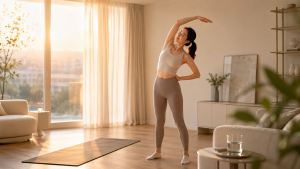
That quiet morning last week, when the first light filtered through the curtains, I stepped onto the cool floor and felt a familiar restlessness. Instead of rushing into the day, I paused for a simple arm stretch, noticing how my breath deepened without effort. This small shift reminded me how mindful movement can weave calm into the ordinary, inviting even the most hesitant beginner to rediscover steadiness through gentle motion.
Waking Slowly: Morning Stretches That Anchor Your Day
Last Tuesday, as the coffee pot gurgled on the counter, I stood by the window and let my arms rise slowly overhead. The cool air brushed my skin, and for a moment, the usual morning fog lifted. It was a simple side bend that caught me off guard—steadying my breath while the world outside woke up.
What helped me was keeping it tied to the familiar rhythm of brewing coffee. No mat needed, just a few feet of space. I noticed how my shoulders softened, easing that tight pull from sleep.
This approach might help you too, especially if mornings feel scattered. Try reaching one arm across your body while standing, then switch. Let your gaze soften on something nearby, like a houseplant or the steam from your mug.
I remember pairing this with a simple morning stretch plan to wake up, which made the habit stick without pressure. Over time, it brought a quiet anchor to days that otherwise spun too fast. The calm lingered, steady through the hours.
Side bends became my go-to because they met me right there in the kitchen. No rush, just gentle reaches that matched my breath. It shifted how I stepped into the day—less restless, more present.
Everyday Walks with a Quiet Focus
One afternoon, I looped around the block, leaves crunching underfoot, and decided to notice just the rhythm of my steps. No phone, no rush—just the steady tap against the sidewalk. It pulled me out of my head, into the slant of sunlight on fences.
Short walks like this eased the midday drag I often felt. What might help you is starting with one loop around your own street. Keep it under ten minutes, eyes on the ground or trees swaying nearby.
I found the key was softening my focus, letting sounds drift in—the distant bark of a dog, wind in branches. It turned a plain stroll into something restorative. Restlessness faded as my body settled into motion.
Neighborhood paths became my quiet reset, especially after long hours at a desk. One day, spotting a familiar cat on a wall made me smile, lightening the step. These moments built a gentle thread through the week.
If your days pull you in many directions, a focused walk can ground you. Notice how your feet land, breath syncing naturally. It invites calm without demanding perfection.
Breath-Guided Poses for Midday Reset
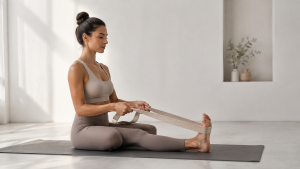
Around 2 p.m., when focus waned and my neck felt tight, I pushed back from the desk for a seated forward fold. Breath leading the way, I let my hands rest on my shins. The room quieted, and tension eased in waves.
This reset worked because it fit between emails and calls—no leaving the chair. What helped was guiding each inhale to lift my spine, exhale to soften forward. Sensations shifted from stiff to steady.
To make it accessible, lean into whatever chair holds you. Short holds, maybe three breaths per pose. It brings back that morning calm when the day piles up.
Four Pillars of Mindful Movement
These pillars shape how I approach breath-guided poses, keeping things simple and kind.
- Pillar 1: Tune into Breath Let each inhale fill your chest softly, exhale release any grip. For example, in a seated twist, breathe to lengthen your spine first.
- Pillar 2: Move with Gentleness No forcing—ease into the motion like water over stones. Try a gentle neck roll, circling only as far as feels steady.
- Pillar 3: Notice Sensations Feel the warmth in your palms or stretch in your side without judgment. During a shoulder shrug, observe the release as you lower.
- Pillar 4: Release Expectations If your mind wanders, that's fine—return with the next breath. In child's pose at your desk, just be there, no perfect form needed.
Together, they turn a quick pause into deeper steadiness. I weave them into breaks, noticing how they quiet inner chatter.
Household Flows: Movement in Chores and Pauses
Washing dishes one evening, I reached for a plate with a slow side stretch, breath deepening as suds foamed. It transformed a chore into flow. Restlessness from the day melted away.
What might help you is rising mindfully from your chair during calls—roll shoulders back, stand tall. Or while folding laundry, hinge at the hips gently. These weave motion into the everyday.
I tied this to gentle tips to build lasting healthy habits, making chores feel less like drudgery. A simple reach while stirring soup brought calm pulses through my arms. It eased the build-up of sitting too long.
Desk pauses became ritual—interlace fingers, stretch arms up, hold for a breath. No big space required. The steady rhythm softened tight spots naturally.
Even vacuuming offers chances: step wide, bend knees softly. Notice how it steadies your core. These flows meet you in the flow of life.
Evening Unwind: Soft Motions to Settle In
As dusk settled last night, I sat on the couch for seated twists, hands on opposite knees, breath turning slow. The day's edges blurred. A tired body welcomed the gentleness.
It helped when I dimmed the lights first, letting motion pair with quiet. What might help you is the same—short twists to release the spine's twist from hours upright. Feel the unwind in your middle.
Gentle experiment: Try 5-minute seated twists for 5 days. Note how your body feels after—calmer breath, looser hips? Jot one word in a notebook, no more. It builds quiet awareness.
I linked this to a relaxing bedtime ritual, easing into sleep steadier. Twists became my signal to slow. Even on restless nights, they grounded me softly.
Listening Deeper: Tuning into Your Body's Steady Rhythm
Over weeks of these small motions, I sensed a deeper rhythm—body speaking through subtle cues. Consistency wasn't about force, but return. Mindset shifted to curiosity over push.
Small changes, like pausing before standing, revealed steadiness waiting underneath. It felt like befriending my own pace. Restless days grew rarer.
What one movement felt steady for you today? Try it tomorrow, just once. Let that question linger as a gentle close.
Frequently Asked Questions
Do I need special clothes or space to start?
No special gear required—slip into comfortable layers you already own, like soft pants and a tee. A small cleared spot, even two feet by two, suffices for most moves. Mindful movement adapts to your surroundings, whether kitchen or corner, keeping it welcoming from day one.
What if I feel stiff or tired?
Stiffness or tiredness shows up for many at first, especially after still days. Begin with the tiniest motions, like shoulder rolls, paired with steady breaths. Over gentle repeats, it often softens, inviting more ease without strain.
How long before I notice a difference?
Some sense calmer breaths after just a few days of short practices. For others, it unfolds over a week of quiet noticing. Focus on the small shifts, not a timeline—your body's rhythm reveals itself kindly.
Can I do this with injuries?
Always tune into your body's signals first—adapt poses or skip what pulls. Gentle versions, like supported sits, can still offer calm. Consult a trusted guide or healer if unsure, prioritizing your steady comfort.
What's next after a week?
Reflect on moments that brought steadiness, perhaps in a quick note. Add one more breath-aware pause daily, like a desk rise. This layers in without overwhelm, deepening your own flow naturally.