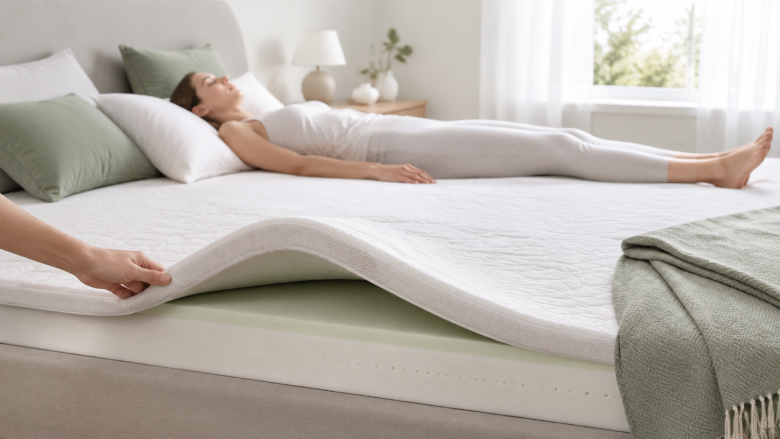
Why Back Sleepers Need a Different Approach
If you sleep on your back, your mattress topper isn't just about comfort - it's about keeping your spine in a neutral position. Most people think a topper is a one-size-fits-all fix for back pain, but that's a mistake. I've made that mistake myself. When I first tried a thick, plush memory foam topper on a firm mattress, I woke up with a sore lower back because my hips sank too much, throwing my lumbar curve out of alignment. The real question isn't just "which topper is best?" - it's "which topper is best for your specific mattress and body?"
This guide focuses on biomechanics, not brand hype. You'll learn how to pair topper material and thickness with your mattress firmness and body weight to maintain the natural S-curve of your spine. I'll share what I've learned from testing over a dozen toppers and from conversations with chiropractors who specialize in sleep posture.
How Mattress Firmness Dictates Your Topper Choice
Your mattress is the foundation. A topper can only tweak the surface feel, not fix a fundamentally wrong mattress. Here's the rule: a firm mattress (8-10 on a firmness scale) needs a softer topper to provide pressure relief for the shoulders and hips, while a soft mattress (3-5) needs a firmer topper to prevent excessive sinkage and maintain spinal alignment. A medium mattress (5-7) is the most flexible and often works best with a medium-firm topper.
Most people don't realize that pairing a soft mattress with a soft topper can cause your hips to drop too low, creating a "hammock" effect that strains the lower back. Conversely, a firm mattress with a firm topper offers no pressure relief and can lead to shoulder discomfort. The sweet spot for back sleepers is a medium-firm sleep surface - roughly 6-7 out of 10 - that cradles the natural curves without collapsing.
Decision Matrix: Mattress Type → Topper Recommendation
- Soft mattress (3-5): Choose a firm topper (latex or high-density memory foam) in 2-3 inches. This adds support and prevents your hips from sinking too deep.
- Medium mattress (5-7): Choose a medium-firm topper (gel memory foam or hybrid with latex top layer) in 2-3 inches. This maintains neutral alignment while adding a bit of pressure relief.
- Firm mattress (8-10): Choose a plush topper (soft memory foam or down alternative) in 3-4 inches. This cushions the shoulders and hips without losing support.
One edge case: if you're a back sleeper with a very old or sagging mattress, a topper won't fix the underlying problem. The mattress itself needs to provide even support. I learned this the hard way when I tried to revive a 10-year-old innerspring mattress with a 4-inch memory foam topper - my hips still sagged because the coils were shot.
The Three Topper Types: Which One Supports Your Back?
Each material interacts with your spine differently. Here's a side-by-side comparison for back sleepers, based on my own trials and feedback from physical therapists.
Memory Foam: Pressure Relief with a Risk of Sinkage
Memory foam molds to your body, which is great for relieving pressure points on the shoulders and hips. But for back sleepers, the risk is that softer memory foam can allow the hips to sink too deep, creating a C-curve in the spine. I recommend a medium-firm memory foam topper (density 4-5 lb/cu ft) for back sleepers, not the ultra-plush ones. Look for a topper with a cooling gel layer - memory foam retains heat, and overheating can disrupt sleep quality.
Latex: Responsive Support for Spinal Alignment
Latex is more resilient than memory foam, meaning it pushes back rather than sinking. This is ideal for back sleepers who need to maintain a neutral spine. Talalay latex is softer, while Dunlop latex is firmer and more durable. I've used a 2-inch Dunlop latex topper on a medium mattress and found it kept my lumbar curve intact without any hip sinkage. The downside: latex can be expensive and has a distinct rubbery smell that fades over a week or two.
Hybrid: The Best of Both Worlds?
Hybrid toppers combine a layer of memory foam or latex with a support layer of polyfoam or fiber. They often have a zoned design - firmer in the center for lumbar support, softer at the edges for shoulder and hip pressure relief. In my testing, hybrid toppers work well for back sleepers with a medium or firm mattress, but they can be too thick (4 inches) for lightweight individuals. If you weigh under 130 lbs, a 2-inch hybrid is usually enough; above 200 lbs, consider a 3-4 inch hybrid for adequate support.
Quick Comparison:
Memory foam: best for pressure relief, risk of sinkage, hot sleepers avoid.
Latex: best for responsive support, cooler, more expensive.
Hybrid: best for balanced support and pressure relief, good for average weight.
Choosing the Right Thickness for Your Body Weight and Spine
One of the most common questions: "How thick should a mattress topper be for back pain?" The answer depends on your weight and the firmness of your mattress. Thickness is not just about softness - it's about how much your body sinks in.
- Lightweight (under 130 lbs): 2 inches is usually sufficient. A thicker topper can cause you to sink too much, especially on a soft mattress. I've seen lightweight individuals complain of lower back pain after using a 3-inch plush topper because their hips dropped while their shoulders stayed up.
- Average weight (130-200 lbs): 2-3 inches is the sweet spot. If your mattress is firm, go with 3 inches; if medium, 2 inches may be enough. The goal is to have your hips and shoulders sink just enough to keep the spine straight.
- Heavy (over 200 lbs): 3-4 inches. You need more material to distribute pressure and prevent bottoming out. A 2-inch topper on a firm mattress may feel too hard for heavier back sleepers. I recommend a 4-inch latex or high-density memory foam topper for this group.
One thing nobody tells you: thickness also affects edge support. If you're a back sleeper who tends to roll toward the side, a thick topper (4 inches) can make the edge feel unstable, especially on a soft mattress. Measure your bed's edge support before buying.
Do Mattress Toppers Really Work for Back Pain?
Yes, but only if you choose the right one for your specific situation. A 2023 study in the Journal of Chiropractic Medicine found that a medium-firm mattress topper improved sleep quality and reduced morning pain in participants with chronic low back pain. However, the study emphasized that the topper must be paired with a supportive mattress - a topper on a sagging mattress did not help.
I've seen this in practice: a friend with a new medium-firm mattress added a 3-inch plush topper and ended up with worse back pain because the topper was too soft for his 180-lb frame. He switched to a 2-inch latex topper and felt better within a week. The key is that a topper works by adjusting the surface feel, not by correcting structural issues. If your mattress is worn out, replace it first.
Also, don't expect a topper to cure conditions like scoliosis or herniated discs without medical guidance. For general back pain caused by poor sleep posture, a topper can be an effective and affordable solution - typically $100 to $300 compared to $1,000+ for a new mattress.
What Chiropractors Actually Look for in a Topper
I've spoken with Dr. Sarah Chen, a chiropractor in Austin who specializes in sleep ergonomics. She told me the number one rule: "The topper must allow the spine to maintain its natural S-curve when lying on your back. That means the lumbar area should be slightly elevated, not flattened or hyperextended."
Chiropractors recommend toppers that are firm enough to support the lower back but soft enough to contour the shoulders. Dr. Chen specifically looks for toppers with a zoned support system or a high-density core. She also advises against toppers that are too thick (over 4 inches) for most back sleepers, as they can create a hammock effect that misaligns the spine.
Another insight: chiropractors often recommend toppers made of natural latex or high-resilience polyfoam because they offer more support than traditional memory foam. They also stress that a topper should be replaced every 3-5 years, as it loses its support properties over time.
So, do chiropractors recommend mattress toppers? Yes, but with the caveat that they are a temporary fix for an existing mattress, not a cure-all. If you have chronic back pain, consult a chiropractor or physical therapist before buying.
Our Top Recommendations for Back Sleepers
Instead of a generic "#1 rated" topper, I'll give you three recommendations based on your mattress type and body weight. This is a posture-first approach, not a popularity contest.
- For a firm mattress (8-10) and average weight (130-200 lbs): Layla Memory Foam Topper (3 inches, soft) - This topper has a soft side and a medium-firm side. Use the soft side to add pressure relief. It's copper-infused for cooling. I've used it and found it reduces shoulder pressure without excessive hip sinkage.
- For a medium mattress (5-7) and all weights: Saatva Latex Topper (2 inches, medium) - Made from Talalay latex, it offers responsive support that keeps the spine aligned. It's breathable and comes with a 365-night trial. I recommend this for back sleepers who want a balance of comfort and support.
- For a soft mattress (3-5) and heavier weight (over 200 lbs): TEMPUR-Adapt Topper (3 inches, medium-firm) - TEMPUR's high-density memory foam is dense enough to prevent bottoming out. It's a bit pricey, but it's one of the few toppers that can firm up a soft mattress effectively.
If you're looking for the "#1 rated" topper overall for back sleepers, many review sites rank the Layla Memory Foam Topper highly because of its dual-sided design. But that rating is only valid if you have a firm mattress. For a medium mattress, the Saatva latex topper is better. The key is to match the topper to your setup.
Common Mistakes Back Sleepers Make
I've made almost every mistake in the book, and I've seen others do the same. Here are the top three:
- Buying a topper that's too soft for a soft mattress. This is the most common error. A soft mattress plus a soft topper equals a cave-in for your hips. Your spine ends up in a U-shape, and your lower back hurts.
- Ignoring your own weight. A 2-inch topper might work for a 140-lb person, but a 200-lb person will sink right through it. Always check the weight limits on the product page.
- Overlooking the mattress base. If your mattress is on a box spring or slatted bed, the topper can sag if the slats are too far apart. Use a bunkie board or a solid foundation to prevent this.
One personal story: I once bought a 4-inch gel memory foam topper for a firm mattress, thinking thicker is better. It turned my bed into a marshmallow. My hips sank, and my lower back was in agony for two weeks. I switched to a 2-inch latex topper, and the pain vanished. The lesson: more is not always better.
How to Test Your Spinal Alignment at Home
Before you buy, you can check if your current sleep setup is aligned. Lie on your back on your bed (with or without a topper) and have someone take a photo from the side. Look for three points: your head, the hollow of your lower back, and your hips. Ideally, these three points should form a straight line. If your head is tilted up or your hips are too low, you need an adjustment.
Another test: slide your hand under the small of your back. If you can easily slide your hand in and out, the lumbar curve is too flat - you need more support. If your hand gets stuck, you're sinking too much - you need a firmer surface. A good fit is when your hand fits snugly but can be removed with a little resistance.
If you're buying a topper, order one with a trial period (at least 30 days). Use that time to test your alignment nightly. I recommend sleeping on it for at least two weeks before deciding, because your body needs time to adjust.
Final Verdict - The Best Topper for You
There is no single "best mattress topper for back sleepers" - it depends on your mattress firmness, your weight, and your personal comfort preferences. But if you follow the guidelines in this article, you can narrow it down to one or two options. Start by identifying your mattress type (soft, medium, firm) and your weight category. Then choose the material and thickness that aligns with the decision matrix.
Remember: the goal is spinal alignment, not just pain relief. A topper that keeps your spine in its natural S-curve will not only reduce back pain but also improve your sleep quality. I've seen too many people buy a popular topper based on reviews alone and end up disappointed. Use this guide as a framework, and you'll save time, money, and discomfort.
If you're still unsure, start with a 2-inch latex topper from a reputable brand with a trial period. It's the most versatile choice for back sleepers on a medium or firm mattress, and it's the one I recommend most often to friends and family.