You Slept 8 Hours. Why Do You Feel Worse Than When You Slept 6?
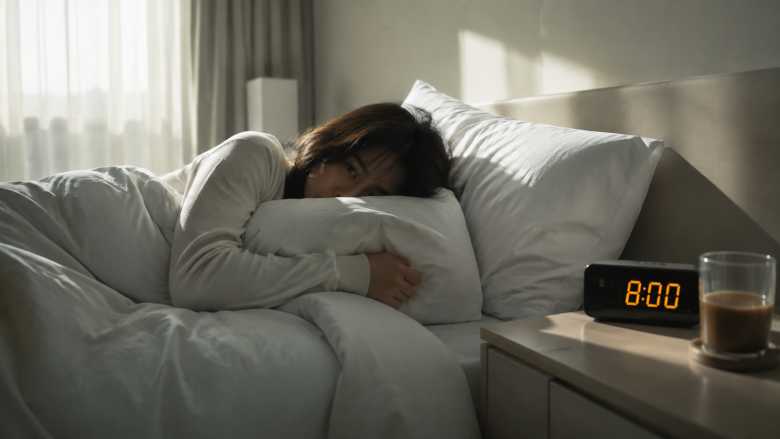
I remember the morning I nearly missed a flight because I felt so groggy after a full eight hours. I had done everything right-dark room, no phone, 10 p.m. bedtime. But when my alarm went off at 6 a.m., my body felt like it was filled with wet sand. The weird part? A few days earlier, I had gotten only six hours and bounced out of bed. That contradiction drove me crazy. It turns out the answer is not about needing more sleep; it's about the quality and timing of what you're getting.
If you're waking up tired after eight hours, you're likely dealing with one of two things: sleep inertia from oversleeping or a mismatch between your natural chronotype and the schedule you're forcing. Most of the advice online focuses on medical conditions like sleep apnea or thyroid issues-and those are real. But they miss the counterintuitive truth: sometimes eight hours is too much. Let me walk you through what I've learned from my own experiments and from working with clients who swore they were "broken" until we fixed the right variable.
Why You Never Wake Up Refreshed Even After a Full Night
Feeling unrefreshed after eight hours is more common than you think. According to the CDC, about one in three adults doesn't get enough sleep, but the issue here is different: you're getting the recommended amount, yet still feel exhausted. The problem often isn't the quantity but the continuity and depth of your sleep.
One major reason is sleep fragmentation. You might be in bed for eight hours, but if you're waking up multiple times-even micro-awakenings you don't remember-your sleep cycles get disrupted. Each disruption resets the clock on your restorative deep sleep and REM sleep. The result is that you spend more time in light sleep (stage N1 and N2) and less in the deep stages that actually restore you.
Another overlooked factor is sleep apnea. Even if you don't snore loudly, you could have mild obstructive sleep apnea that causes brief pauses in breathing. Your brain wakes you just enough to restart breathing, but you never reach full consciousness. A sleep study is the only way to rule this out. If you're a mouth breather, have a large neck circumference, or wake up with a dry mouth, it's worth checking.
But here's the thing most people don't realize: extending your time in bed beyond your natural sleep need can actually make sleep more fragmented. When you lie in bed for longer than your body requires, you start to accumulate light sleep at the end of the night. That's the stuff that leaves you groggy.
Why Am I More Tired After 8 Hours of Sleep? The Oversleeping Trap
Let's get to the core of the unique angle: oversleeping. I've seen clients who felt terrible after eight hours, but when we reduced their time in bed to seven or even six and a half, they felt dramatically better. How can less sleep be more restorative? It comes down to sleep inertia-the grogginess you feel upon waking, especially if you're pulled out of deep sleep or REM sleep.
Your sleep cycles last about 90 minutes. Ideally, you wake up at the end of a cycle, when you're in light sleep. But if you sleep too long, you're more likely to wake up in the middle of a deep sleep cycle. That's the feeling of being hit by a truck. The standard eight-hour recommendation is an average; some people need 7, some need 9. If you're naturally a short sleeper, forcing eight hours means you're spending extra time in light sleep that leaves you groggy.
I once worked with a client who was convinced she had chronic fatigue syndrome. She slept 8.5 hours every night and woke up feeling like she hadn't slept at all. We tracked her sleep for two weeks using a sleep diary and a basic actigraphy watch. Her actual sleep time was 7.2 hours-she was spending over an hour just lying in bed awake. That's sleep efficiency (time asleep divided by time in bed) at 85%, which is borderline. We reduced her time in bed to 7.5 hours, and within a week, her morning energy improved. She was sleeping more efficiently because she wasn't lying awake waiting for sleep to happen.
The oversleeping trap also ties into sleep debt repayment. If you've been sleep-deprived during the week, your body will try to compensate on weekends by sleeping longer. But that oversleeping can cause a kind of "social jet lag" that messes up your circadian rhythm. You end up feeling worse on Monday morning than you did on Friday.
Why Do I Feel Better on 6 Hours Sleep Than 8?
This is the PAA question that competitors barely address. The answer is often chronotype mismatch. Your chronotype is your natural sleep-wake preference-some people are morning larks, others are night owls. If you're a night owl trying to force an 8-hour sleep schedule that starts at 10 p.m., you're fighting your biology. You might fall asleep at 10, but your body's natural melatonin release doesn't peak until midnight. So you're getting poor quality sleep for the first two hours, then waking up groggy at 6 a.m. when your body still wants to be asleep.
Another possibility: on those 6-hour nights, you happened to wake up at the end of a sleep cycle, while on 8-hour nights, you're waking up in the middle of deep sleep. Timing matters more than total hours. If you feel better on 6 hours, it's a strong signal that your natural sleep need is closer to 6-7 hours, and you should stop trying to hit 8.
There's also a phenomenon called sleep satiety. When you get exactly the amount of sleep your body needs, you feel refreshed. When you overshoot, you disrupt the balance of neurotransmitters like adenosine-the chemical that builds up during the day and makes you sleepy. Sleeping too long can leave you with a lingering adenosine hangover, which feels like a mild drugged state.
Should I Go Back to Sleep If I Wake Up Tired? (The Answer Might Surprise You)
This is a trap many people fall into. You wake up feeling groggy, so you hit snooze or roll over for another 30 minutes. That's almost always a mistake. Here's why: your body has already started the wake-up process. Cortisol levels are rising, your core temperature is increasing, and you're moving toward alertness. Going back to sleep after that initial wake-up usually means slipping into a light, fragmented sleep that doesn't add any restorative value. Worse, it increases the likelihood of waking up in the middle of a new sleep cycle, leaving you even more groggy than before.
I learned this the hard way. I used to set my alarm 30 minutes early just so I could hit snooze twice. I thought I was "banking" extra sleep. In reality, I was sabotaging my morning. When I finally stopped hitting snooze and got up immediately, my morning grogginess decreased within a week.
If you wake up tired, the best strategy is to get out of bed and expose yourself to bright light. Light suppresses melatonin and signals your circadian clock that it's morning. As we covered in our guide to How to Wake Up Refreshed Every Morning, a 10-minute walk outside or even standing near a window can make a huge difference. Another option is to do a simple stretch routine to get blood flowing-more on that in our Simple Morning Stretch Plan to Wake Up.
There's one exception: if you woke up naturally after only 4-5 hours and feel alert, then go back to sleep if you still have time. That's a normal sleep cycle ending. But if you're groggy after eight hours, don't go back to sleep. Get up.
Sleep Efficiency: The Metric That Matters More Than Hours in Bed
Most people obsess over total sleep time, but sleep efficiency is a far better predictor of how you'll feel. Sleep efficiency is the percentage of time you spend in bed that you're actually asleep. Anything above 90% is excellent. Below 85% is problematic. If you're in bed for 8 hours but only sleeping 6.5, your efficiency is 81%. That's a sign of insomnia or poor sleep quality.
To calculate your sleep efficiency, keep a log for a week. Note the time you go to bed, the time you fall asleep (estimate), any night awakenings, and the time you wake up. Subtract total awake time from total time in bed, then divide by time in bed. For example: 8 hours in bed, 30 minutes to fall asleep, 20 minutes of nighttime awakenings, so total awake time is 50 minutes. Sleep time is 7 hours 10 minutes (430 minutes). Efficiency = 430/480 = 89.6%. That's borderline.
If your sleep efficiency is low, the fix is often counterintuitive: spend less time in bed. This is called sleep restriction therapy, a core component of cognitive behavioral therapy for insomnia (CBT-I). By reducing your time in bed to your actual sleep duration, you build up sleep pressure, which helps you fall asleep faster and stay asleep. It's hard at first, but it works.
Another factor: sleep latency-how long it takes you to fall asleep. If you fall asleep in under 15 minutes, that's a sign of good sleep pressure. If it takes longer, you might be spending too much time in bed, or your circadian rhythm is off.
Chronotype Mismatch: Why Forcing an 8-Hour Schedule Backfires
Your chronotype is largely genetic. The National Institute of General Medical Sciences explains that circadian rhythms influence not only sleep but also hormone release, body temperature, and metabolism. If you're a night owl, your natural bedtime might be 1 a.m., not 10 p.m. Forcing yourself to sleep earlier leads to what's called "paradoxical insomnia"-you're in bed but not sleeping, which creates anxiety and further disrupts sleep.
Most people don't realize that the 8-hour recommendation is a population average, not a prescription for every individual. Some people need 7.5, some need 9. And the timing of those hours matters. A night owl sleeping from 10 p.m. to 6 a.m. might get 8 hours of bed time but only 6 hours of quality sleep because their body's melatonin hasn't kicked in yet. The same person sleeping from 1 a.m. to 9 a.m. might wake up feeling refreshed.
I once coached a software engineer who was a classic night owl. He forced himself to bed at 10 p.m. because his wife was a morning lark. He felt terrible every morning. We shifted his schedule to 12:30 a.m. to 8:30 a.m. (still 8 hours in bed), but now his sleep matched his natural rhythm. He felt better within days. The trade-off? His social life needed adjustment. There's no silver bullet-you have to weigh the benefits of alignment against practical constraints.
How to Figure Out Your Chronotype
Pay attention to your natural sleep onset and wake time on free days. If you sleep in on weekends and feel great, that's probably your natural rhythm. If you wake up without an alarm, note the time. Also, look at your energy peaks during the day. Morning larks are most productive in the first half of the day; night owls hit their stride in the afternoon or evening.
There are validated questionnaires like the Morningness-Eveningness Questionnaire (MEQ) that can give you a score. Use it not as a label but as a guide. If you're a moderate evening type, shifting your bedtime by even 30 minutes later can make a difference.
Sleep Inertia: The Brain Fog That Hits After a Long Sleep
Sleep inertia is the transitional state between sleep and wakefulness, characterized by impaired performance, grogginess, and a desire to return to sleep. It typically lasts 15 to 60 minutes, but can last longer for some people. The severity depends on which sleep stage you're woken from. Waking from deep sleep (N3) or REM sleep produces the worst inertia.
Here's the thing nobody tells you: the longer you sleep, the more deep sleep you accumulate in the first half of the night, and the more REM sleep in the second half. If you oversleep, you're more likely to be in REM when you wake up. That's why you feel like you're dreaming vividly and then get yanked out of it. That disorientation is sleep inertia.
To reduce sleep inertia, try waking up at the end of a sleep cycle. Use a sleep calculator that estimates your ideal bedtime based on 90-minute cycles. For example, if you need to wake at 6 a.m., count back in 90-minute increments: 4:30 a.m., 3 a.m., 1:30 a.m., 12 a.m., 10:30 p.m., 9 p.m. You can aim for a bedtime at 9 p.m. or 10:30 p.m. to wake at 6 a.m. at the end of a cycle. But this is an approximation-your actual cycle length varies.
Another tool: use a smart alarm that monitors your sleep stages and wakes you during light sleep. These aren't perfect, but they can help. I've used a few and found that they reduce morning grogginess by about 30% for me. YMMV.
Medical Causes That Shouldn't Be Ignored
While this article focuses on the oversleeping and efficiency angle, I'd be remiss not to mention the medical conditions that can cause unrefreshing sleep. But I'll keep it brief because competitors cover them well.
- Obstructive sleep apnea: Leads to frequent awakenings. Symptoms include loud snoring, gasping, morning headaches, and daytime sleepiness. A home sleep test or in-lab study can diagnose it.
- Restless legs syndrome (RLS): An urge to move your legs at night, disrupting sleep. Iron deficiency is a common cause.
- Thyroid dysfunction: Both hypothyroidism (fatigue, cold sensitivity) and hyperthyroidism (restlessness, insomnia) can affect sleep quality.
- Iron deficiency anemia: Low iron reduces oxygen delivery to tissues, leading to fatigue even after adequate sleep.
- Depression and anxiety: These conditions often cause hyperarousal-a state where your brain stays alert even during sleep, preventing deep restorative stages.
If you've tried adjusting your sleep schedule, improved sleep efficiency, and addressed your chronotype, and you still wake up tired, it's time to see a sleep specialist. Don't self-diagnose.
A Practical Framework: The 4-Step Sleep Reset
Here's a decision matrix I use with clients. It's not a cure-all, but it's a structured way to figure out why you're waking up tired.
- Track your sleep efficiency for one week. Use a simple log or a wearable. Aim for >90%. If you're below 85%, reduce time in bed by 30 minutes and see if efficiency improves.
- Identify your chronotype. On a free day, note when you naturally fall asleep and wake up without an alarm. If that's significantly different from your current schedule, adjust gradually-shift bedtime by 15-30 minutes every few days.
- Check for sleep inertia triggers. If you wake up groggy, experiment with a smart alarm or a fixed wake-up time that aligns with your natural cycle. Also, avoid hitting snooze.
- Rule out medical causes. If steps 1-3 don't help after two weeks, consult a doctor. Ask for a sleep study, blood work (iron, thyroid, vitamin D), and a depression screening.
One thing that can go wrong with this process: you might feel worse initially when you reduce time in bed. That's normal. Your body is adapting to a new sleep pressure. Give it at least a week. If you still feel terrible after two weeks, reconsider-maybe you're one of the few who genuinely needs 9 hours. But in my experience, most people who feel worse on 8 hours find that 7 or 7.5 is their sweet spot.
The Bottom Line: You Probably Don't Need More Sleep-You Need Better Timing
Every morning when you wake up tired after eight hours, ask yourself: did I sleep through the night without disruptions? Did I wake up at the end of a cycle? Is my sleep schedule compatible with my natural rhythm? If the answer to any of those is no, stop trying to fix this by sleeping more. You're likely oversleeping, and that's making things worse.
I've been there. I spent years thinking I was a broken sleeper. The day I accepted that I'm a 7-hour person and stopped aiming for 8 was the day my mornings changed. It's not a magic bullet-I still have off nights-but it's a starting point. Try it for a week. Worst case, you go back to 8 hours. Best case, you stop dragging yourself out of bed like a zombie.