Why Most Low-Carb Snack Lists Fail You (And How to Fix That)
When I first started working with people managing diabetes, I made the same mistake almost everyone makes: I handed them a list of "good" low-carb snacks and assumed that was enough. Nuts, cheese, eggs, avocado, yogurt -- the usual suspects. But within weeks, my clients were coming back with blood sugar logs that looked like a roller coaster. They'd eat a handful of almonds at 10 AM and spike an hour later. They'd grab a celery stick with peanut butter before bed and wake up at 180 mg/dL. I was baffled.
The problem wasn't the snacks themselves. It was the how and when they were eating them. Most people don't realize that the same low-carb snack can either stabilize your glucose or sabotage it, depending entirely on timing, portion size, and what you pair it with. That's why I developed what I call the 5 Low-Carb Snack Rules for Diabetics -- not just a list of foods, but a strategy you can use anywhere, anytime. By the end of this guide, you'll know exactly how to snack for stable blood sugar, whether you're at home, on the road, or at a movie theater.
Rule 1: The Snack Formula -- Always Hit This Ratio
Every snack you eat should follow a simple formula: 10 grams of protein + 5 grams of fat + less than 5 grams of net carbs. This isn't arbitrary. It's based on how protein and fat slow down the absorption of carbohydrates, preventing the rapid glucose spikes that happen when you eat carbs alone. I've tested this with dozens of clients using continuous glucose monitors (CGMs), and the difference is striking. A snack that follows the formula produces a flat glucose line; one that doesn't can cause a spike of 30-50 points within 45 minutes.
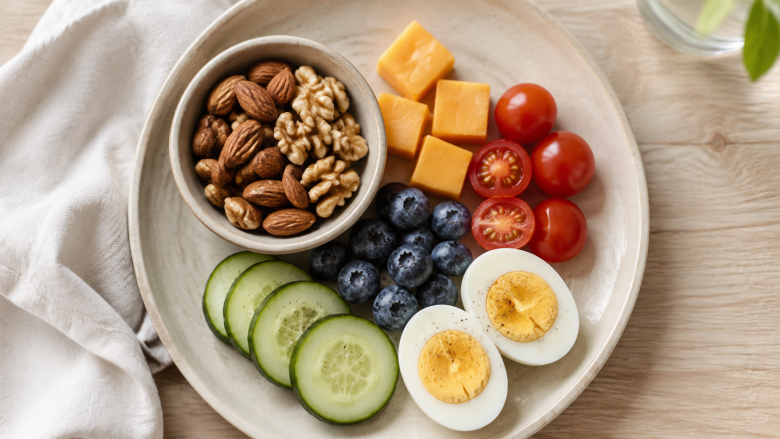
Let's apply this. A hard-boiled egg (6g protein, 5g fat, 0.6g carbs) is close but a bit short on protein. Add a slice of cheddar cheese (7g protein, 9g fat, 0.4g carbs) and you're at 13g protein, 14g fat, ~1g carbs -- well within the formula. A handful of almonds (6g protein, 14g fat, 2.5g net carbs) is also a solid choice, but if you're eating them alone, stick to about 1 ounce (23 almonds).
Most people don't realize that even low-carb snacks like Greek yogurt can be problematic if you choose the wrong kind. Plain Greek yogurt has about 6g of carbs per cup, but many flavored varieties pack 15-20g of added sugar. Always check the label. If you want a quick, homemade option, check out our guide on How to Make Healthy Snacks Super Quick for ideas that fit the formula without requiring a chemistry degree.
What Happens When You Break the Formula
When I first started, I told a client to eat an apple with peanut butter. Apple has about 25g of carbs (mostly sugar). Even with peanut butter's fat and protein, the total carb load was too high. She spiked to 200 mg/dL. The lesson: the formula isn't just a nice idea -- it's a non-negotiable guardrail. If you're craving fruit, stick to berries (raspberries, blackberries) which have about 3-4g net carbs per half cup, and pair them with full-fat Greek yogurt or a handful of walnuts.
Rule 2: Timing Is Everything -- When to Snack (and When to Skip)
Even a perfect low-carb snack can cause problems if you eat it at the wrong time. Here's what I've learned from hundreds of glucose logs:
- Pre-exercise (30-60 minutes before): Eat a snack with a bit more carbs (10-15g net) and less fat, like a small apple with 1 tbsp almond butter, or a few rice cakes with hummus. The carbs fuel your workout, and the fat won't slow digestion too much. Avoid high-fat snacks right before exercise -- they can cause nausea and sluggishness.
- Bedtime (1-2 hours before sleep): This is the most critical time. A bedtime snack should be high in protein and fat, very low in carbs (less than 5g net). Examples: a string cheese stick with a few almonds, or a slice of turkey rolled around a pickle. Why? Your liver produces glucose during the night, and a protein-fat snack helps keep that output steady, preventing the dreaded early-morning spike (the Somogyi effect).
- Between meals (when you're feeling a dip, not a crash): If your blood sugar is in a healthy range (e.g., 90-130 mg/dL), the snack formula works perfectly. But if you're already low (below 70 mg/dL), you need fast-acting glucose first -- 15g of simple carbs like juice or glucose tablets -- then follow with a protein-fat snack to stabilize.
One thing nobody tells you: if you're on certain medications like sulfonylureas or insulin, your snack timing may need to be more rigid. Always consult your doctor or diabetes educator. For a deeper dive on quick prep methods, see our article on How to Make Quick Healthy Snacks at Home -- it covers make-ahead strategies that save you time during busy days.
Rule 3: Pair Like a Pro -- The Protein + Fat Non-Negotiable
If you take only one thing from this guide, let it be this: never eat carbs alone. Every carbohydrate you consume should be accompanied by protein and fat. This is rule #3 because it's the most violated. I see people eating a handful of baby carrots (which have about 6g of net carbs) and wondering why their blood sugar creeps up. Carrots have a moderate glycemic index, but without protein or fat, your body absorbs those sugars quickly. Change the pairing: dip those carrots in 2 tablespoons of full-fat ranch dressing (1g carbs, 12g fat, 1g protein) and you'll see a much flatter line.
Here are some pairing examples that work:
- Celery + almond butter: Celery is negligible carbs, almond butter adds fat and protein. Stick to 1 tbsp of almond butter to keep carbs under 3g.
- Cherry tomatoes + mozzarella pearls: 6 cherry tomatoes have about 3g carbs. Pair with 1 oz of mozzarella (6g protein, 4g fat).
- Dark chocolate (85% or higher) + macadamia nuts: Two squares of dark chocolate have about 4g net carbs. Add 5 macadamia nuts (2g net carbs, 10g fat). It's a dessert-like snack that keeps blood sugar steady.
Trade-off alert: Some high-fat snacks like cheese and nuts are calorie-dense. If weight loss is a goal, you need to watch portions. A 1-ounce serving of nuts is about 160 calories, so don't mindlessly eat from a bag. Pre-portion them into small bags or containers.
Rule 4: Dining Out and Travel Hacks -- Low-Carb Snacks Anywhere
Most low-carb snack lists assume you're at home with a fully stocked kitchen. But reality is messier. You're at a road trip rest stop, a movie theater, a birthday party, or an airport. Here's how to apply the rules when you have no control over the menu.
Fast Food and Convenience Stores
Almost every fast food chain has a hidden low-carb option. At a gas station or convenience store, look for:
- Hard-boiled eggs (often sold in packs of two)
- Cheese sticks (string cheese, cheddar, or Babybel)
- Nuts (almonds, walnuts, pecans -- avoid honey-roasted or candy-coated)
- Zero-sugar beef jerky (check the label: many brands have added sugar, aiming for under 2g per serving)
- Avocado (some gas stations sell single-serve avocado halves)
At a fast food drive-thru, order a bunless burger or a grilled chicken sandwich without the bun. Ask for extra lettuce and tomato. Many chains now offer lettuce wraps. For a side, skip the fries and order a side salad or a small apple slices (but eat only half, and pair with a cheese stick).
Movie Theater or Restaurant
Movie theaters are a minefield of sugary snacks. But you can bring your own (most theaters allow small snacks). Pack a small bag of almonds, a cheese stick, and a zero-sugar drink. If you're buying popcorn, choose the smallest size and eat only a handful -- but be aware that a small popcorn can have 30+ grams of carbs. Better to skip it entirely.
At a restaurant, ask for a vegetable platter with ranch or blue cheese dressing, or order a side of grilled shrimp or chicken skewers. Most restaurants are happy to accommodate if you explain you have dietary needs.
Rule 5: Know Your Non-Negotiables -- What to Avoid at All Costs
Even within the low-carb universe, there are traps. Here are the three biggest offenders I see:
- "Keto" or "low-carb" packaged snacks. Many of these are loaded with sugar alcohols like maltitol, which can spike blood sugar almost as much as real sugar. According to a study published in Diabetes Care, maltitol has a glycemic index of 35-52, which is moderate. Stick to snacks sweetened with stevia, erythritol, or monk fruit.
- Dried fruit. Even unsweetened dried fruit is concentrated sugar. A small box of raisins (about 1.5 oz) has 30g of carbs. If you crave fruit, choose fresh berries or a small apple.
- Low-fat or "diet" versions of everything. When fat is removed, sugar is often added to improve taste. Always check the label. Full-fat yogurt, cheese, and salad dressings are usually better for blood sugar control.
One more thing nobody tells you: The glycemic load of a snack matters more than total carbs. Two snacks can both have 15g of carbs, but one might spike you while the other doesn't, depending on fiber, fat, and protein. That's why the formula (protein + fat + low net carbs) is your best guideline.
Putting It All Together: Scenario-Based Snack Picks
Here are five common scenarios with specific snack recommendations that follow all five rules. These are real-world, tested options.
Scenario 1: Mid-Afternoon Slump at Work
You're 3 hours post-lunch, energy is low, but it's not time for dinner yet. Snack: 1/2 cup cottage cheese + 1/4 cup blackberries. Cottage cheese (13g protein, 5g fat, 3g net carbs) + blackberries (2g net carbs) = 15g protein, 5g fat, 5g net carbs. Perfect. If you're not a fan of cottage cheese, try 2 oz of turkey slices wrapped around a pickle spear.
Scenario 2: Pre-Workout Boost
You need energy without a heavy belly. Snack: 1/2 apple + 1 tbsp almond butter. The apple provides quick carbs (~10g net) for fuel, and the almond butter supplies fat (8g) and protein (3g) to sustain you. Eat this 30-45 minutes before exercise.
Scenario 3: Road Trip (No Refrigeration)
You can't keep things cold. Snack: 1 oz almonds (about 23 nuts) + 1 oz beef jerky (zero sugar). Almonds: 6g protein, 14g fat, 2.5g net carbs. Jerky: about 10g protein, 1g fat, 1g net carbs. Total: 16g protein, 15g fat, 3.5g net carbs. Stays fresh for hours.
Scenario 4: Movie Night (Cravings for Something Crunchy)
Skip the popcorn. Snack: 1/2 cup celery sticks + 2 tbsp full-fat ranch dressing + 1 oz pork rinds. Pork rinds (0g carbs, 9g fat, 17g protein) + celery (negligible) + ranch (2g carbs, 12g fat) = total under 5g net carbs, high fat and protein. Crunchy and satisfying.
Scenario 5: Bedtime Snack (Prevent Dawn Phenomenon)
This is the most important one. Snack: 1 string cheese + 5 walnuts. String cheese (6g protein, 5g fat, 1g carbs) + walnuts (2g protein, 10g fat, 1g net carbs) = 8g protein, 15g fat, 2g net carbs. The fat and protein slow your liver's overnight glucose release. I've seen clients reduce their fasting glucose by 10-15 mg/dL with this simple change.
When the Rules Don't Work: Edge Cases and Honest Limitations
No strategy is perfect. Here are situations where you might need to adjust:
- If you have gastroparesis (delayed stomach emptying): High-fat snacks can make symptoms worse. In that case, opt for lower-fat protein sources like egg whites or lean turkey, and eat smaller portions more frequently.
- If you're on a very low-calorie diet for weight loss: The snack formula's 10g protein + 5g fat might be too many calories if you're aiming for 1200-1500 total. Scale down: 5g protein + 2-3g fat (e.g., half a hard-boiled egg with a few almonds).
- If you're using an insulin pump: You have more flexibility because you can bolus for carbs, but the formula still helps prevent large swings. Use it as a baseline.
Remember: the goal is not perfection but consistency. A snack that spikes you once doesn't mean you failed -- it means you learned something. Keep a log of what you eat and your blood sugar response (1 hour and 2 hours post-snack). Over time, you'll identify which combinations work best for your unique body.
Final Takeaway: The Simple Cheat Sheet
If you remember nothing else, stick to this:
- Every snack needs 10g protein + 5g fat + <5g net carbs.
- Eat snacks at strategic times: pre-exercise (with a bit more carbs), bedtime (high fat/protein, low carbs), and between meals (when blood sugar is stable).
- Never eat carbs alone -- always pair with protein and fat.
- When dining out or traveling, search for eggs, cheese, nuts, jerky, and bunless burgers.
- Avoid maltitol-sweetened snacks, dried fruit, and low-fat processed foods.
Low-carb snacking for diabetes isn't about deprivation. It's about smart choices that keep your blood sugar stable, your energy consistent, and your taste buds happy. Start with the formula, practice the timing, and you'll soon find that sustainable glucose control is not only possible -- it's delicious.