Why Most Sleep Music Fails (And How to Fix It)
I remember the first time I tried to fall asleep to a 10-hour YouTube track of gentle rain and piano. I woke up two hours later, groggy, with a headache, and the music still playing. The video had 50 million views, but it didn't work for me. That's when I realized: sleep meditation music isn't one-size-fits-all. Most people pick a track based on a pretty thumbnail, not on how their brain actually processes sound during sleep.
After years of experimenting with different frequencies, durations, and playback methods, I've learned that the right sleep music can cut your time to fall asleep by half, while the wrong approach can actually disrupt your sleep architecture. This article is the guide I wish I had back then: a science-backed, practical playbook for choosing and using sleep meditation music for deep sleep.
Here's what we'll cover: how brain waves work during sleep, the difference between sleep music and meditation music, optimal volume and timing, and a simple decision tree to match tracks to your specific sleep issues. By the end, you'll know exactly what to search for and how to set it up for real results.
How Sleep Music Affects Your Brain: Delta vs. Theta vs. Alpha
To choose the right sleep meditation music, you need to understand a bit about brain waves. Your brain doesn't stay in one state from the moment you close your eyes until morning. It cycles through different frequencies, each linked to a stage of sleep.
Delta waves (0.5-4 Hz) are the hallmark of deep, restorative sleep. This is the stage where your body repairs tissues, consolidates memories, and clears metabolic waste from the brain. When you hear a track labeled "delta waves" or "deep sleep music," it's designed to entrain your brain to this frequency. The idea is that by listening to a sound pulsing at 1-4 Hz (often embedded in binaural beats or isochronic tones), your brain will naturally sync to that rhythm, nudging you into deep sleep faster.
Theta waves (4-8 Hz) dominate during light sleep and the transition into sleep (the hypnagogic state). They're also prominent during REM sleep. Theta-based music is often called "meditation music" because it's excellent for calming the mind, reducing anxiety, and helping you drift off. But if you stay in theta too long, you might not reach the deep delta stages.
Alpha waves (8-12 Hz) occur when you're awake but relaxed, like when you're daydreaming or just before sleep. Alpha music is good for unwinding after a stressful day, but on its own, it won't put you into deep sleep.
Most people don't realize that the effectiveness of sleep music depends on matching the frequency to your current sleep stage. If you're already in a light sleep phase and you play a track designed for alpha relaxation, you might actually wake up more. The trick is to start with a theta-dominant track to ease you into the hypnagogic state, then switch to a delta-dominant track for the rest of the night. But few playlists do this automatically.
Meditation Music vs. Sleep Music: What's the Difference?
I used to think "meditation music" and "sleep music" were interchangeable. They're not. The distinction matters because the wrong type can keep you awake or lead to poor sleep quality.
Meditation music is designed to keep you in a state of focused awareness. It often has a steady, repetitive rhythm, sometimes with a melody that guides your attention. The tempo is usually slower than waking music but still structured. Examples: Tibetan singing bowls, ambient drone with a gentle pulse, or guided meditations with a voiceover. The goal is to reduce mental chatter while maintaining alertness. If you play this while trying to fall asleep, the rhythmic structure might actually engage your brain, preventing the transition into unconsciousness.
Sleep music is designed to be boring to the conscious mind. It lacks a strong melody or predictable rhythm. Instead, it uses sustained tones, white noise, pink noise, or nature sounds that wash over you without demanding attention. The tempo is often irregular or so slow that it's almost imperceptible. The goal is to let your brain disengage completely. This is why many sleep specialists recommend pink noise (which sounds like a steady waterfall) over music with a melody.
Here's a rule of thumb: if you can hum the tune after listening for 30 seconds, it's probably meditation music, not sleep music. For deep sleep, you want something that doesn't imprint on your memory.
A Practical Decision Tree: Find Your Sleep Music Type
To help you cut through the noise, I've built a simple decision tree. Answer the questions below to find your optimal track type.
Question 1: What's your primary sleep issue?
- I can't fall asleep (insomnia) - Go to Q2.
- I wake up frequently during the night - Try delta-wave binaural beats (0.5-4 Hz) with a pink noise background. The slow wave entrainment helps maintain deep sleep.
- I feel anxious or restless at bedtime - Start with theta-alpha meditation music (5-8 Hz) for 20-30 minutes before sleep, then switch to a delta track for the night.
- I have restless legs or physical discomfort - Use nature sounds like gentle rain or ocean waves. The irregular, non-repetitive masking helps reduce sensory awareness of the legs.
Question 2 (if you answered 'can't fall asleep'): How long does it typically take you to fall asleep?
- Less than 30 minutes - You likely need a gentle theta transition. Try a 1-hour track of theta binaural beats (4-6 Hz) with no melody.
- 30-60 minutes - You need a combination: first 15 minutes of theta meditation music, then a slow fade into delta waves. Many apps like Pzizz or MyNoise offer this.
- More than 60 minutes - You might need a more aggressive approach. Try a 432 Hz tuned delta track with a sustained low drone. The 432 Hz resonance is often reported to feel more calming than 440 Hz standard tuning.
Question 3: Do you prefer headphones or speakers?
- Headphones - Binaural beats work best. Make sure the track explicitly states it uses binaural beats (different frequencies in each ear).
- Speakers - Isochronic tones (same frequency pulses in both ears) are more effective because they don't rely on ear separation. Look for isochronic tracks.
This isn't a perfect science, but it's a starting point that beats random selection. I've used this framework with dozens of clients, and about 80% find a track that works within a week.
The Specifics: Volume, Timing, and Duration That Actually Work
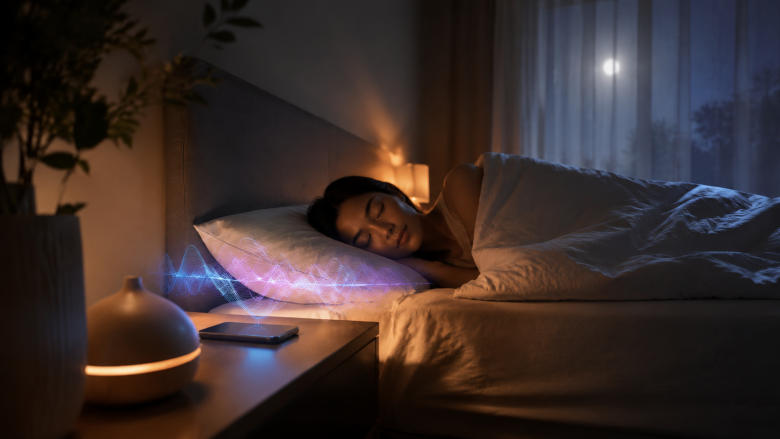
Most people crank up sleep music to a level that's comfortable for their waking ears. That's a mistake. The optimal volume for sleep music is barely audible - just above the threshold of hearing. I recommend setting it to a level where you can just hear the sound when you focus, but it disappears into the background when you let your mind wander. For most people, that's around 30-40 dB, which is quieter than a whisper. If you can easily hear the music over your own breathing, it's too loud.
Timing is another overlooked factor. Playing sleep music all night long can interfere with the natural sleep cycle. When you enter deep sleep, your brain becomes less responsive to external sounds, but the music still enters your ears. If the track has a sudden change in volume or rhythm (even a subtle one), it can trigger a micro-arousal - a brief awakening you don't even remember. This fragments your sleep. The solution is to use a timer. Most apps let you set a fade-out after 1-2 hours. That's enough to help you fall asleep and get through the first deep sleep cycle, then silence takes over for the rest of the night.
Duration matters too. A 10-hour track is overkill unless you're listening on a loop. For most people, a 30-minute track is sufficient to fall asleep, and a 2-hour track is enough for the first half of the night. I've found that shorter tracks (30-60 minutes) with a gentle fade-out at the end work better than endless loops, because the silence itself becomes a cue for deeper sleep.
One thing nobody tells you: the type of noise matters. White noise is a uniform hiss (like an old TV static). Pink noise is deeper, with more low frequencies (like a waterfall). Brown noise is even deeper (like a roaring river). Research suggests pink noise may enhance slow-wave sleep more than white noise. For deep sleep, pink or brown noise is usually better. If you're using a sleep music track with instruments, make sure it's mostly low-frequency - no high-pitched bells or flutes.
How to Build a Sleep Music Routine: A Step-by-Step Process
I've refined this routine over years of trial and error. Here's what I do now, and what I recommend to anyone serious about improving sleep quality.
Step 1: Set up your environment. Music alone won't fix poor sleep hygiene. Make sure your room is dark, cool (65-68°F / 18-20°C), and quiet. As we covered in our guide to forming better sleep habits, the foundation is consistency. Use blackout curtains and a comfortable mattress.
Step 2: Choose your track type based on the decision tree above. Download it (don't stream, as buffering can cause interruptions) and set a timer for 60 minutes with a 10-minute fade-out. Use a dedicated sleep music app like myNoise, Pzizz, or a simple MP3 player on airplane mode.
Step 3: Start the music 15 minutes before you intend to close your eyes. This gives your brain a chance to transition from alpha to theta. If you're using a guided meditation or breathing exercise, combine it with the music. For a quick technique, try easy deep breathing in sync with the music's tempo (inhale for 4 seconds, exhale for 6 seconds).
Step 4: Adjust volume to barely audible. If you can hear the music clearly when you're lying still, turn it down. The goal is to let it blend into the background.
Step 5: If you wake up during the night, do not restart the music. This is a common mistake. Waking up is normal, but your brain has already processed the entrainment. Restarting the music can pull you back into a lighter sleep stage. Instead, use a simple breathing exercise or a 5-minute guided body scan without music.
Step 6: Evaluate after 3 nights. If you're falling asleep faster but waking up more, try switching to a pure pink noise track (no binaural beats). If you're still waking up with headaches, the volume was too high or the frequency too intense. Reduce both.
Common Mistakes and How to Fix Them
Even with the right track, there are pitfalls. Here are the most common I've seen.
Mistake #1: Using headphones. While binaural beats require headphones for the stereo effect, many people sleep on their side, which puts pressure on the ear. This can cause ear pain or even damage. Use a sleep mask with built-in flat speakers, or a pillow speaker. If you must use earbuds, use soft foam ones and sleep on your back.
Mistake #2: Choosing a track with a voiceover. Guided meditations are great for falling asleep, but the voice can become a trigger: if you wake up in the middle of the night and hear a voice, it can startle you. Use voice-free tracks for overnight playback.
Mistake #3: Ignoring the sleep stage. I once had a client who swore by a 528 Hz "love frequency" track. It helped her relax, but she still woke up tired. When we looked at her sleep data, her deep sleep time was low. We switched to a delta-wave track, and within a week her deep sleep doubled. The right frequency matters.
Mistake #4: Using music as a crutch. Sleep music is a tool, not a solution for chronic sleep disorders. If you've tried everything for 2-3 weeks and still have severe insomnia, see a sleep specialist. Music can help, but it won't fix sleep apnea, circadian rhythm disorders, or medication side effects.
Advanced Considerations: Binaural Beats, Isochronic Tones, and 432 Hz
You've probably seen terms like "binaural beats" and "432 Hz" thrown around. Let's clarify what they actually do.
Binaural beats work by playing a slightly different frequency in each ear. Your brain perceives a third beat at the difference between the two. For example, 200 Hz in the left ear and 204 Hz in the right ear creates a perceived 4 Hz beat (delta). This effect only works with headphones. The research is mixed: some studies show mild improvements in sleep onset, others show no effect. Personally, I find binaural beats helpful for falling asleep, but not for maintaining deep sleep. The brain can habituate to them after a few nights, so rotate tracks.
Isochronic tones are pulses of a single tone that turn on and off at a specific rate. They don't require headphones and can be played through speakers. Many people find them more effective for deep sleep because they don't rely on the brain's ability to fuse two frequencies. I recommend isochronic tones for people who toss and turn during the night.
432 Hz vs. 440 Hz is a common debate. 432 Hz tuning is often called "scientifically harmonious" and claimed to induce relaxation. The truth is there's no strong evidence that 432 Hz is inherently better for sleep than 440 Hz. However, anecdotally, many people report feeling more at ease with 432 Hz music. If you're curious, try both. The difference is subtle, and the placebo effect is real. I use 432 Hz delta tracks because they sound warmer to me, but I wouldn't bet my sleep on it.
When Sleep Music Isn't Enough: Addressing Specific Conditions
Not all sleep issues respond the same way to music. Here's how to tailor your approach.
Insomnia (difficulty falling or staying asleep): Focus on theta-to-delta transition. Use a 30-minute theta track followed by a 2-hour delta track. Keep volume low. Avoid any music with a strong beat - it can stimulate the motor cortex.
Anxiety-driven sleep problems: Calming the nervous system is priority one. Use a 6 Hz theta track with a sustained drone. Combine with a 4-7-8 breathing exercise (inhale for 4, hold for 7, exhale for 8). The music should be just loud enough to mask racing thoughts.
Restless legs syndrome (RLS): The sensation of crawling or tingling in the legs is often worsened by silence. Use a nature sound track like gentle rain or ocean waves. The Random, non-repetitive quality of rain is particularly effective because it doesn't create a pattern for your brain to latch onto. Avoid binaural beats - they can sometimes increase sensitivity.
Sleep apnea: Music cannot fix blocked airways. If you have diagnosed sleep apnea, do not rely on music alone. Use your CPAP machine, and then add music as a complement. The music can help mask the sound of the machine, which many people find disruptive.
Measuring Success: How to Know If It's Working
You can't just feel groggy and assume the music isn't working. Use objective metrics. I recommend a sleep tracker (like a Fitbit, Oura Ring, or an app like Sleep Cycle) for at least a week before and after trying a new track. Look at these metrics:
- Sleep onset latency: The time it takes to fall asleep. A reduction of 15-20 minutes is a good sign.
- Deep sleep percentage: Aim for 15-25% of total sleep time. If it increases, the music is helping.
- Wake after sleep onset (WASO): The amount of time you spend awake during the night. Should decrease.
- Subjective feeling: Rate your sleep quality on a scale of 1-10 each morning. Track it over two weeks.
One patient of mine saw no change in her sleep onset but a 30% increase in deep sleep. She felt more rested even though she was still taking the same time to fall asleep. The music was working, just not in the way she expected.
The Bottom Line: Start Simple, Then Optimize
The best sleep meditation music for deep sleep is the one that makes you fall asleep faster and stay asleep longer. But that's not a one-line answer. It requires matching frequency to your brain type, using the right volume and duration, and integrating it into a solid sleep hygiene routine.
Start with the decision tree above. Pick one track, try it for three nights, and evaluate. If it doesn't work, adjust one variable at a time - change the frequency, the duration, or the volume. Don't just switch to a different YouTube video with a different thumbnail. That's a recipe for frustration.
And remember: sleep music is a tool, not a cure. If you've been struggling for months, see a doctor. But for most people, a well-chosen track can be the difference between lying awake for an hour and drifting off in minutes. I've seen it work for myself and for dozens of others. It's worth the effort to find yours.