What Low Impact Actually Means (And Why It's Not the Same as Easy)
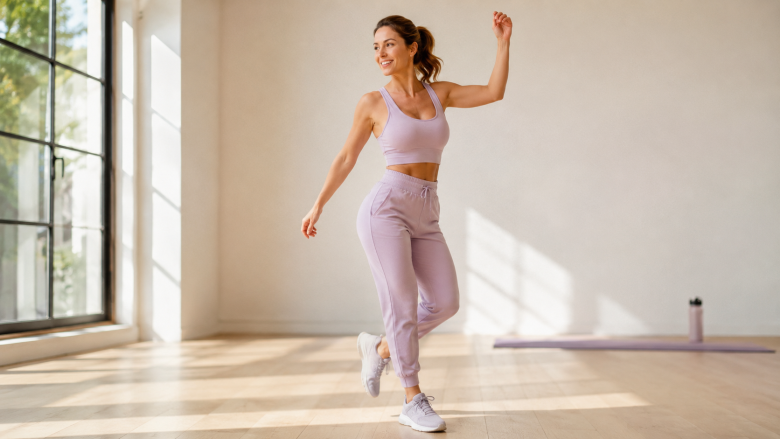
When I first searched for a low impact dance workout for beginners, I assumed it meant a gentle, barely-moving routine that wouldn't break a sweat. I was wrong. The first video I tried had me stepping side to side while pumping my arms, and within five minutes my heart was pounding - but my knees felt fine. That's when I realized the core distinction: low impact means one foot stays on the ground at all times. It does not mean low intensity. You can absolutely spike your heart rate, burn calories, and even build endurance without ever jumping, hopping, or landing hard. The trick is leveraging arm drive, continuous stepping, and progressive choreography. This article will teach you exactly how to do that - protecting your joints while still getting a satisfying cardiovascular workout.
Most people don't realize that joint pain during exercise is not a badge of honor. It's a signal that something needs to change. Low impact dance workouts are designed to keep you moving safely, especially if you have knee, hip, or ankle concerns, are returning from an injury, or are simply new to exercise. But here's the thing nobody tells you: you can still sweat, still feel your lungs working, and still leave the workout feeling accomplished - all without a single jump. The key is understanding the mechanics.
Key takeaway: Low impact = one foot on the ground at all times. Low intensity = low effort. They are not the same. A good low impact dance workout for beginners can be high intensity (high heart rate) while remaining low impact (gentle on joints).
Why Low Impact Dance Workouts Work: The Physiology Behind the Fun
Before we dive into moves and routines, let's talk about why this approach is so effective. From a physiological standpoint, low impact dance work for beginners hits several important systems:
- Joint safety: By eliminating the landing phase of jumps, you reduce the force transmitted through your knees and hips by up to 60-70%. This is critical for anyone with arthritis, patellofemoral pain, or recovering from injury.
- Lymphatic flow: Continuous, rhythmic movement - especially with large muscle groups - helps pump lymph fluid through your body, supporting immune function and reducing fluid retention.
- Heart health: You can achieve a heart rate in the 120-150 bpm range (moderate to vigorous intensity) simply by stepping continuously and adding arm movements. According to the CDC's Physical Activity Guidelines for Americans, adults need at least 150 minutes of moderate-intensity aerobic activity per week. Low impact dance fits that perfectly.
- Balance and coordination: Learning choreography - even simple step-touch patterns - challenges your brain and body to work together, which improves proprioception and reduces fall risk.
One common misconception is that you can't burn many calories without jumping. But when I teach my beginner classes, I often have participants wear heart rate monitors. A 150-pound person doing continuous low impact dance moves - like grapevines with arm raises, step-touches with punches, and box steps - can burn 200-300 calories in 30 minutes. That's comparable to a brisk walk or light jog, but far more enjoyable for many people. If you want to track your own calorie burn, our Walk Calories For Beginners Calculator uses MET values that can give you a rough estimate based on your weight and time spent dancing.
The Three Pillars of a Low Impact Dance Workout for Beginners
After years of teaching and experimenting, I've distilled the approach into three core principles. These are what separate a truly effective low impact dance workout from a boring sway-fest.
1. Arm Drive Is Your Secret Weapon
When you can't increase intensity by jumping, you increase it by moving your arms more vigorously. The larger the range of motion, the more oxygen your muscles demand, and the higher your heart rate climbs. For example, instead of just stepping side to side, add alternating overhead reaches. Instead of a basic march, pump your arms like you're running - but keep your feet on the floor. The effect is immediate. I once had a student tell me, "I thought this was going to be easy, but my shoulders are burning!" That's the point. Arm drive turns a gentle step into a full-body cardio move.
2. Continuous Stepping Keeps the Heart Rate Up
The biggest mistake beginners make is stopping between moves. In a low impact dance workout, you never fully rest. Every transition should involve a basic step, a march in place, or a side-to-side sway. Think of it as a moving meditation: your feet are always in motion. This keeps your heart rate elevated throughout the session, mimicking the cardiovascular benefits of jogging without the impact. A good rule of thumb: if you find yourself standing still for more than two seconds, you've lost the cardio effect.
3. Progressive Choreography Adds Challenge Without Impact
As you get comfortable, you can increase the complexity of the steps - not the height of your jumps. For example, start with simple step-touch, then progress to grapevine, then add a turn, then add a box step with a clap. This progression challenges your coordination and keeps your brain engaged, which in turn makes the workout feel less repetitive and more fun. The goal is to add amplitude (larger steps, bigger arm circles) and complexity (more direction changes, quicker transitions) - never impact.
How to Modify Common Dance Moves for Low Impact
One of the most valuable skills you can learn is how to take any dance move and make it low impact. Here's a quick reference guide based on what I teach in my beginner workshops:
| Original Move | Low Impact Modification | Why It Works |
|---|---|---|
| Jumping jack | Step out to side, tap feet together (no jump) | Eliminates landing force; still works arms and legs |
| Hopscotch | Step forward and back, or side to side | Keeps one foot on ground; same directional pattern |
| High knee run | Walk knees up (not run); or march in place with high knees | Reduces impact but still engages hip flexors and core |
| Jump squat | Bodyweight squat without jump | Works quads and glutes; no landing stress |
| Plyo lunge | Alternating reverse lunges, no jump | Same muscle activation, less joint strain |
When I first started modifying moves, I made the mistake of thinking I had to eliminate all vertical movement. But that's not true. You can still rise onto your toes, lift your heels, and even do small lifts - as long as one foot stays in contact with the ground or you land softly with bent knees. The priority is to avoid both feet leaving the floor simultaneously. That single rule protects your joints more than anything else.
Best Low Impact Exercises for Beginners (Specifically Dance Moves)
Now let's get practical. What are the best low impact exercises for beginners that you can use in a dance workout? I've compiled a list of moves that are easy to learn, easy to modify, and effective for raising your heart rate. These also double as the best exercises for beginner dancers because they build coordination and rhythm without requiring technical skill.
- Step-Touch: Step right foot out, bring left foot to touch beside it. Alternate sides. Add arm circles or punches for intensity.
- Grapevine: Step right foot to side, cross left behind, step right again, tap left beside. Add a clap or arm sweep. Great for lateral movement.
- Box Step (Basic): Step forward with left, step right beside, step back with left, step right beside. Reverse. This is a foundational dance step that builds coordination.
- V-Step: Step right foot forward and out at 45 degrees, then left foot forward and out, then step back to center. Think of drawing a V with your feet. Add arm raises.
- March with Knee Lifts (Low Impact): March in place, lifting knees to hip height. Keep the pace steady. For lower impact, lift only to 45 degrees.
- Side Shuffle with Tap: Shuffle two steps to the right, then tap left toe. Repeat to left. Add a side reach with arms.
- Heel Digs: Step forward on right heel, then bring back. Alternate. Add a chest press motion with arms.
These moves can be combined into a simple routine. For example: 8 step-touch, 4 grapevines, 4 box steps, repeat. That's a 1-minute block. If you repeat this for 10 minutes with minimal rest, you'll already feel your heart rate rise. The beauty of low impact dance is that you can make it as simple or as complex as you want - the moves stay the same, but the intensity comes from speed, arm movement, and duration.
Putting It Together: A Sample 10-Minute Low Impact Dance Routine for Beginners
Here's a routine I've used with dozens of beginner students. It's designed to be easy to follow, with clear cues. You can repeat it twice for a 20-minute session, or three times for 30 minutes. Remember: keep your feet moving, and use your arms to control intensity.
- Warm-up (2 minutes): March in place, then add side-to-side steps. Circle arms forward and backward. Roll shoulders. The goal is to increase blood flow without rushing.
- Block 1 (2 minutes): Step-touch right/left (8 reps), then grapevine right/left (4 reps each side), then march with knee lifts (16 reps). Repeat.
- Block 2 (2 minutes): V-step forward/back (8 reps), then box step (4 reps), then heel digs (8 reps each side). Add arm raises on V-step and chest presses on heel digs.
- Block 3 (2 minutes): Side shuffle with tap (8 reps each side), then step-touch with overhead reach (8 reps each side), then march with alternating arm punches (16 reps).
- Cool-down (2 minutes): Slow down to a slow march, then step-touch with smaller arm movements. Stretch hamstrings, quads, calves, and shoulders.
When I first taught this routine, one participant complained that it was too easy during the warm-up. By the third minute, she was out of breath. That's the low impact paradox: it feels deceptively gentle until your heart rate catches up. If you find the pace too fast, slow down the music or reduce the arm range. If it's too slow, speed up the steps or add bigger arm circles.
Equipment, Footwear, and Surface Advice
You don't need much to start a low impact dance workout for beginners, but the right setup makes a difference. Here's what I recommend based on real experience:
- Footwear: Wear cross-trainers or dance sneakers with good lateral support. Avoid running shoes with thick heels - they can throw off your balance during side-to-side moves. If you're on carpet, you might even go barefoot or wear grip socks, but be careful with turns.
- Surface: A wooden floor or low-pile carpet is ideal. Avoid concrete or tile unless you have a thick mat - the lack of cushioning can still stress joints even without jumping. A yoga mat can work for standing moves, but it may shift. A dedicated exercise mat is better.
- Props: None required. But if you want to increase intensity without impact, hold light hand weights (1-3 lbs) while doing arm movements. I caution beginners against using weights until they have proper form - it's easy to strain shoulders. Alternatively, use resistance bands for arm work.
- Music: Use a playlist with a steady beat around 120-130 BPM for beginners. Faster music (140+ BPM) will push you to move quicker, but can lead to sloppy form. Slow it down if you're just learning the choreography.
One thing most people don't realize: the floor matters more than the shoe. I've taught on sprung dance floors and on concrete. The difference in joint comfort is night and day. If you're stuck on concrete, invest in a thick interlocking foam mat - it absorbs a surprising amount of shock.
Progression Path: From 8 Minutes to 30 Minutes
A common question I get is, "How do I know when to increase my workout length?" The answer is not based on time alone, but on how your body responds. Here's a progression framework I use with my students:
- Stage 1 (Weeks 1-2): 8-10 minute sessions, 3 times per week. Focus on learning the basic moves and maintaining continuous stepping. Heart rate should be moderate (able to talk, but slightly breathless).
- Stage 2 (Weeks 3-4): 15-minute sessions, 4 times per week. Add arm drive and increase step amplitude. You should be sweating by the end.
- Stage 3 (Weeks 5-8): 20-25 minute sessions, 4-5 times per week. Combine multiple blocks of choreography. Add direction changes and turns.
- Stage 4 (Week 9+): 30-minute sessions, 5 times per week. You can now do a full routine with minimal rest. At this point, you might also want to track your progress with our 30-Day Walking Plan for Total Beginners - it's a different modality but complements dance well for building endurance.
Notice that progression is about adding time and complexity, not impact. You should never feel joint pain during or after your workout. If you do, drop back to the previous stage and check your form. A little muscle fatigue is fine; sharp knee pain is not.
Pain vs. Exertion: How to Listen to Your Body
This is perhaps the most important section for beginners. There is a difference between the burn of a hard-working muscle and the stab of joint pain. Low impact dance workouts should leave you feeling energized, not achy. Here's how to tell the difference:
- Good pain (exertion): A warm, tired feeling in your quadriceps, glutes, or shoulders. Your breathing is heavy, but you can still maintain rhythm. You might feel a mild burning sensation in your muscles.
- Bad pain (injury signal): Sharp, stabbing, or grinding sensation in your knees, hips, or lower back. Pain that gets worse as you move, or persists after you stop. Any clicking accompanied by pain.
If you feel bad pain, stop immediately. Modify the move: reduce range of motion, slow down, or skip that move entirely. For example, if knee lifts hurt, switch to simple marching. If side steps aggravate your hip, try forward-back steps instead. There is no shame in modifying. I once had a student with patellofemoral pain who could only do step-touch with tiny steps and no arm movement for two weeks. After building strength, she was able to add full range without pain. The key is patience.
Another thing nobody tells you: sweating does not equal joint damage. You can be drenched in sweat and still be perfectly safe. In fact, low impact dance is one of the safest ways to achieve a high sweat rate because it doesn't rely on explosive movements. So don't be afraid to push your cardiovascular system - just keep your feet grounded.
Common Mistakes and How to Avoid Them
Over the years, I've seen beginners make the same mistakes. Here are the most common ones, along with fixes:
- Mistake: Stopping between moves. Fix: Always keep a basic step in place as a transition. Even if you're thinking about the next move, your feet should be moving.
- Mistake: Locking your knees. Fix: Keep a soft bend in your knees at all times. This absorbs shock and protects your joints.
- Mistake: Using too much arm force too soon. Fix: Start with small arm movements and gradually increase range. Your shoulders will thank you.
- Mistake: Looking at your feet. Fix: Choreography is easier if you look forward, not down. Trust your feet to find the floor. If you need to look down, slow down.
- Mistake: Picking music that's too fast. Fix: Beginners should start with 110-120 BPM. You can increase BPM as you become more comfortable.
One mistake I made personally: I thought low impact meant I could skip warming up. That led to a tight hip flexor that took weeks to resolve. Always warm up for at least 2 minutes with marching and dynamic stretches.
Frequently Asked Questions About Low Impact Dance Workouts (Answered Naturally)
Throughout this article, I've touched on many of the questions beginners ask. But let me address two more directly, as they come up in every class I teach.
What are the best low impact exercises for beginners? The best ones are those that combine simple footwork with upper body engagement. Step-touch, grapevine, box step, and V-step are my top recommendations because they are easy to learn and highly modifiable. You can do them at any pace, with any range of motion. For a full-body workout, add arm movements like punches, circles, and reaches. The key is to keep moving continuously - that's what makes it a workout rather than just a stretch.
What are the best exercises for beginner dancers? If your goal is to improve dance skills specifically (not just fitness), focus on moves that build coordination and rhythm. The same moves listed above are excellent: grapevine teaches lateral awareness, box step teaches directional control, and V-step builds spatial awareness. Add a simple turn: step forward, pivot, step back. Practice with music to internalize the beat. A good beginner dance workout should include at least one new pattern per session to challenge your brain. For more structured progression, consider our 30-Day Walking Plan for Total Beginners - it's not dance, but it builds the aerobic base that makes dance workouts easier.
Final Thoughts: Dance Hard, Stay Gentle
Low impact dance workouts for beginners are not a compromise - they are a smart, sustainable way to build cardiovascular fitness, improve coordination, and have fun without beating up your joints. The secret is to embrace the paradox: you can work hard while moving softly. Use your arms to drive intensity, keep your feet always in contact with the ground, and progress by adding complexity not impact. I've seen people in their 60s with knee replacements do these workouts and come back smiling. I've seen complete beginners go from barely stepping to full choreography in a month. It's possible because the method is forgiving, but effective.
If you're ready to start, pick any of the moves above, put on your favorite music at 120 BPM, and just step-touch for 5 minutes. See how your body feels. If it feels good, add another move. That's all it takes. Your joints will thank you, and your heart will get the workout it deserves.